Booking choice: The Shibuya highlights walk, ★ 4.9 (722). Check dates Compare the options below
Most people arrive at Shibuya Crossing knowing the picture before they know the place: a sea of people stepping off the kerb in every direction under giant screens. The story behind it is older and quieter. It starts with an Akita who waited at Shibuya Station every evening for almost ten years, and a junction that became a pedestrian scramble in 1973.
This guide covers why the crossing is famous, Hachiko and his two statues, how the scramble works, the numbers people quote and how reliable they are, the films and games, and how to find the Hachiko Exit while the station is being rebuilt. When to go is in the best time to visit, and where to watch from above in where to watch the crossing.
The quick answer
Shibuya Crossing is famous because five roads meet in front of Shibuya Station, the lights stop all traffic at once, and at busy times well over a thousand people cross together in every direction, including one long diagonal. Films such as Lost in Translation and Tokyo Drift made it the screen image of Tokyo. Hachiko was an Akita born in 1923 who went on waiting at the station for his owner, Professor Hidesaburo Ueno, for almost ten years after the professor died in 1925. The first statue went up in 1934 while Hachiko was still alive; today's bronze dates from 1948. The statue and the crossing are open to everyone and need no ticket. Station works have moved the Hachiko Exit gate more than once since 2025, so follow the current signs.
Why is the Shibuya crosswalk so famous?
Because it shows Tokyo's crowds at a glance: every car stops, everyone crosses at once in every direction, and it happens roughly every two minutes right outside one of the busiest stations in the world. Films, games and millions of phone videos have done the rest.
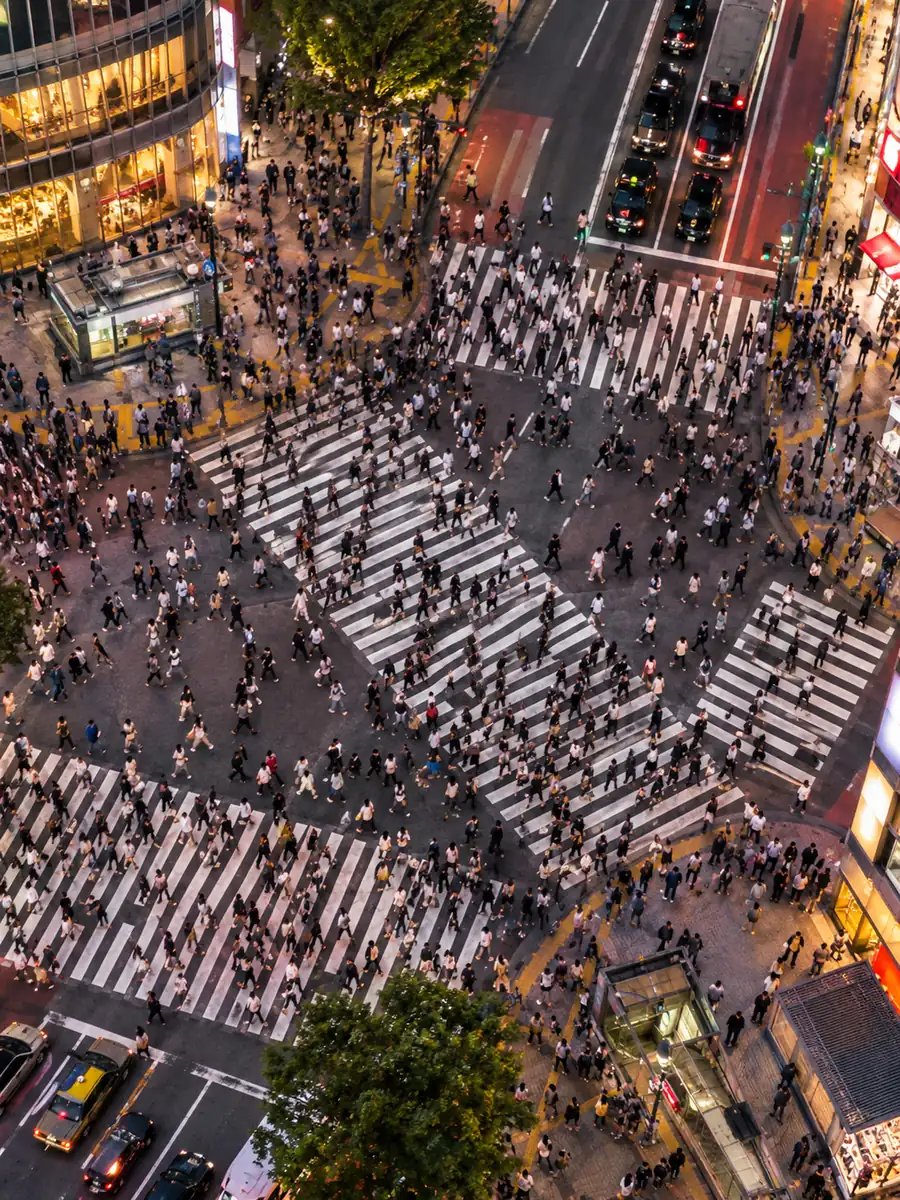
- The scramble itself: five crosswalks and a single diagonal, all green together, so the crowd meets in the middle and passes through itself.
- The station: nine major lines stop at Shibuya, and JNTO puts the station's daily passengers at about 3 million. Many of them walk out of the Hachiko Exit straight onto the crossing.
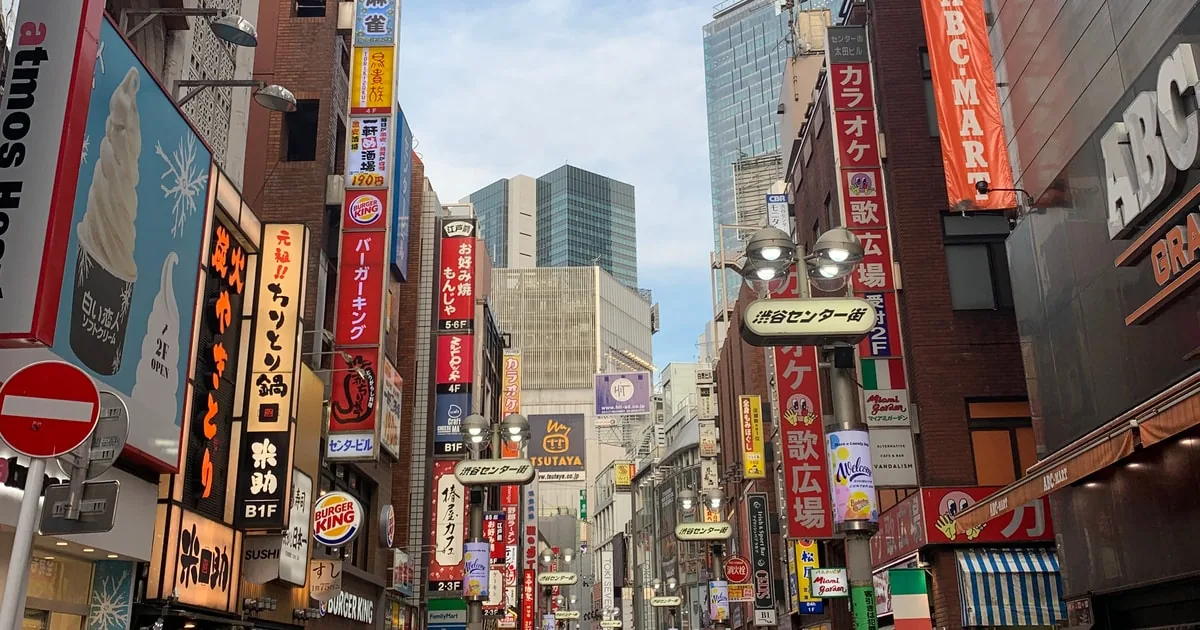
- The setting: giant screens on almost every building, SHIBUYA109 at the fork of two streets, and Center Gai leading off into the shopping lanes.
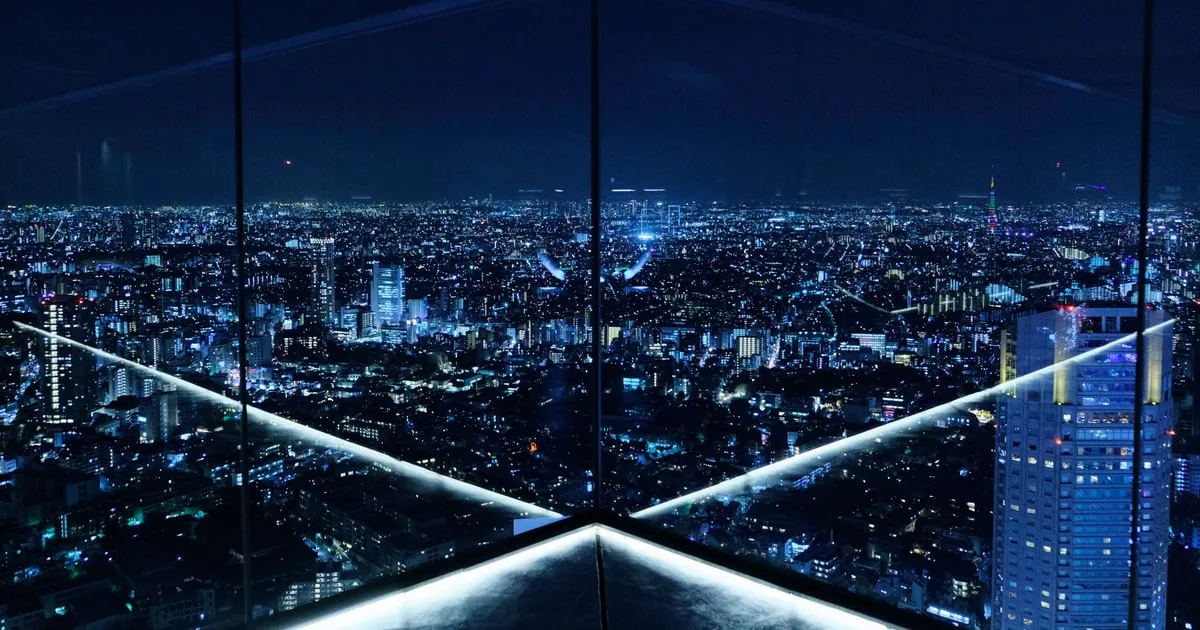
- The views: the crossing is easy to watch from above, from cafe windows to the SHIBUYA SKY rooftop, which is why it photographs so well.
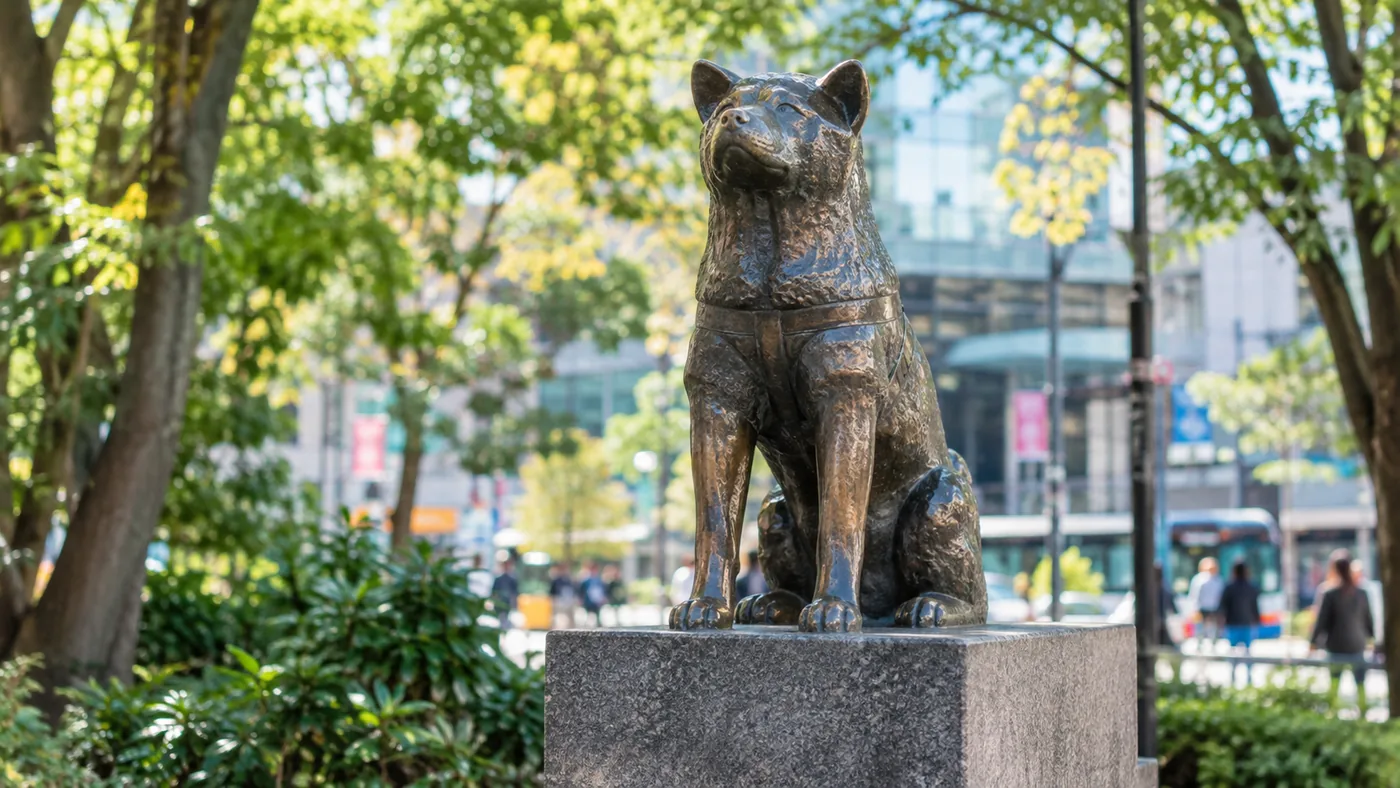
- Hachiko: the bronze dog in the square gives the whole place a story and a meeting point.
What is the true story of Hachiko?
Hachiko was an Akita born in November 1923 who met his owner, Professor Hidesaburo Ueno of the University of Tokyo, at Shibuya Station each day. The professor died suddenly on 21 May 1925, and Hachiko went on coming to the station for almost ten years, until his own death on 8 March 1935.
People at the station noticed the dog who kept waiting at the same time every evening, and newspaper stories made him famous across Japan as a symbol of loyalty. He became part of Shibuya's daily life long before there was a scramble crossing or a single giant screen.
His story was filmed twice: Hachiko Monogatari in 1987, and Hachi: A Dog's Tale in 2009, with Richard Gere, which moved the story to the United States and brought many visitors to the statue.
Hear the Hachiko story where it happened: the most booked Shibuya walk starts by the statue, rated 4.9 from 722 reviews.
Check dates for the Shibuya highlights walkWhen was the Hachiko statue made?
The first statue, by the sculptor Teru Ando, was unveiled on 21 April 1934, while Hachiko was still alive. It was melted down during the war, and the one you see today, by his son Takeshi Ando, was unveiled on 15 August 1948.
The statue stands in Hachiko Square, a few steps from the crossing. It is small, lower than many visitors expect, and it is Shibuya's classic meeting point, so there is usually a short queue for photos. Come early in the morning if you want the dog to yourself.
On the busiest nights of the year the statue has been fenced off: in recent years around Halloween and on New Year's Eve, when crowd-control barriers go up around the station. The rest of the year it is open to everyone at any hour.
When did Shibuya Crossing become a scramble crossing?
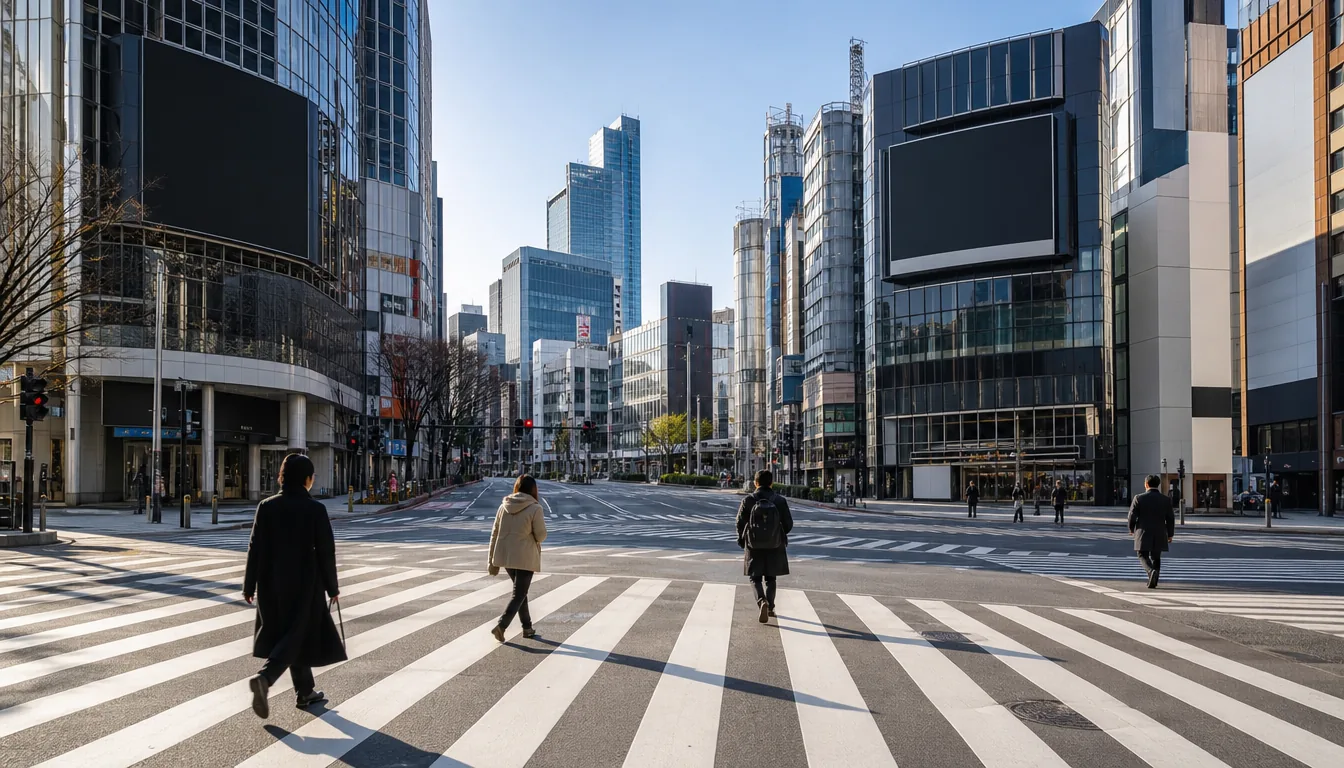
In 1973. Five roads meet in front of the station, so the scramble has five crosswalks and a single diagonal, not the big X most people picture, and it was not Japan's first: Kumamoto had a scramble in 1968.
The junction itself is much older. Shibuya Station opened in 1885, and the square took its modern shape as the railways arrived, the Tokyu Toyoko Line in 1932 among them. What changed in 1973 was the signal: the lights started to stop every car at once and let pedestrians cross in every direction. There are now about 300 scramble crossings in Japan; Shibuya is simply the most famous. How long you have to cross is in the best time to visit.
| Year | What happened |
|---|---|
| 1885 | Shibuya Station opens |
| 1923 | Hachiko is born |
| 1925 | Professor Ueno dies; Hachiko keeps waiting |
| 1934 | The first Hachiko statue is unveiled |
| 1935 | Hachiko dies, almost ten years after his owner |
| 1948 | Today's statue replaces the one lost in the war |
| 1968 | Japan's first scramble crossing, in Kumamoto |
| 1973 | Shibuya's junction becomes a scramble |
| 2019 | Shibuya Scramble Square and SHIBUYA SKY open |
| 2030s | The station rebuild is due to finish |
How many people cross Shibuya Crossing every day?
Nobody counts officially, but estimates run to several hundred thousand people a day, and up to around half a million on the busiest days. With each green light, well over a thousand people cross at busy times; some estimates put the peak at around 2,500 to 3,000.
The famous "3,000 at once" goes back to the local shopping street association, and it describes the busiest moments, not a normal green light. JNTO, the national tourism body, gives a more careful range of 1,000 to 2,500 people every two minutes. The daily figures come from station passenger data and surveys, so treat them as a sense of scale rather than a count.
What you notice on the ground is the rhythm: the kerbs fill up while the cars pass, then the lights change and everyone moves at once. On a weekday evening or a Friday night, you feel the numbers without needing them.
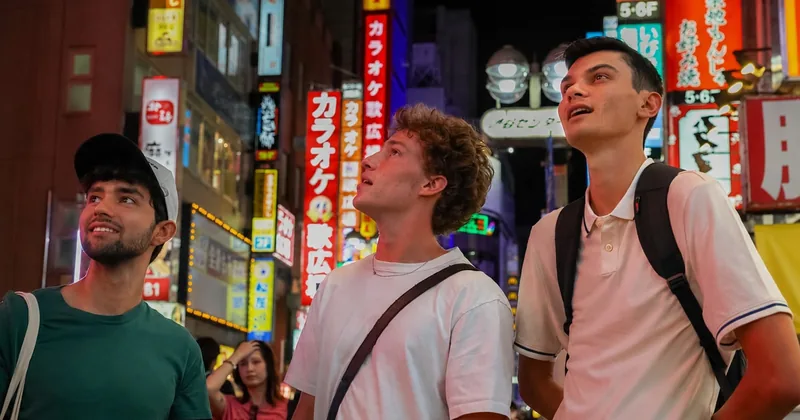
Want the history with the view? The Shibuya Crossing, Culture and Hidden Gems Walk starts at the Hachiko Exit and explains how post-war Shibuya grew around the station, through Center Gai and Koen-dori. 1.5 hours, rated 5.0 from 42 reviews, full refund if you cancel up to 24 hours ahead.
Explore the crossing and culture walkIs Shibuya Crossing the busiest crossing in the world?
It is often called that, but it is a popular label rather than a measured title. No official body counts pedestrians at crossings around the world in a way that would settle it.
It is certainly one of the busiest and by far the most photographed. The claim sticks because the scene looks the part: a crowd from every direction, meeting in the middle, several times an hour, all day. JNTO and GO TOKYO describe it as one of Tokyo's best-known sights without ranking it.
If you want to see the crowd at its fullest, come on a weekday evening between about 5 and 8 pm, or on a Friday or Saturday night; the hour-by-hour detail is in the best time to visit.
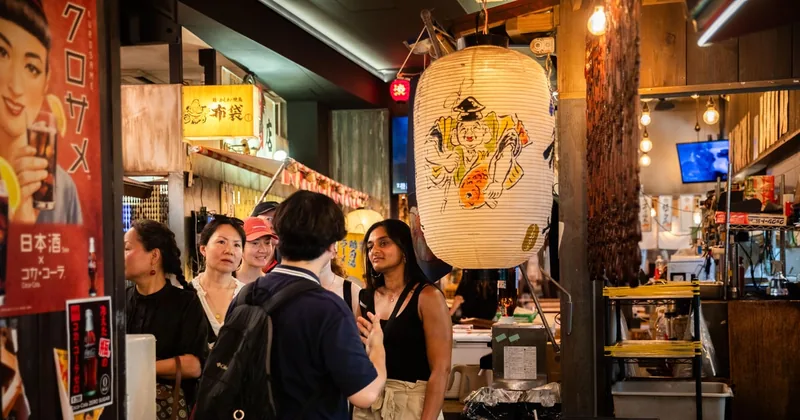
See the back streets behind the famous view: the Crossing and Hidden Streets Walk takes in the Myth of Tomorrow mural, Nonbei Yokocho and Miyashita Park.
Check dates for the crossing and hidden streets walkWhich films and games feature Shibuya Crossing?
The crossing has become shorthand for Tokyo on screen, from Lost in Translation to The Fast and the Furious: Tokyo Drift and Resident Evil: Retribution. It also appears in Alice in Borderland, Jujutsu Kaisen and Sonic the Hedgehog 3, and in games such as Persona 5 and The World Ends with You.
- Lost in Translation (2003): the giant screen on the QFRONT building, home of SHIBUYA TSUTAYA, shows a walking dinosaur as the crowd crosses beneath it.
- Tokyo Drift (2006): the crossing as the heart of the city's street-racing world.
- Resident Evil: Retribution (2012): the scramble at the centre of an outbreak scene.
- Anime and series: Jujutsu Kaisen sets a major story arc around Shibuya, and Alice in Borderland opens on an empty crossing.
- Games: Persona 5 and The World Ends with You both rebuild Shibuya's streets around the scramble.
Fans often recreate their favourite shot from the Starbucks window above the crossing or from the corner by Hachiko. Keep moving while you film, and step to the side to shoot.

How do I find the Hachiko Exit at Shibuya Station?
Follow the signs for the Hachiko Exit (ハチ公口). Because of station works the gate has moved more than once since 2025, so follow the current signs rather than an old map, and top up your IC card first: the temporary gate has no ticket machines.
Shibuya Station is in the middle of a long rebuild that is not due to finish until the 2030s. Gates, stairs and passageways move from time to time, and some familiar landmarks in Hachiko Square have been removed or covered along the way. The square itself is set to grow once the works are done. The crossing and the statue stay open throughout.
Once you are out, the statue is in the square just before the crossing, usually with people waiting beside it. Most walking tours meet here, including the most booked one, which starts at SHIBU HACHI BOX by Hachiko. Trains and the other exits are on the planning section of the homepage.
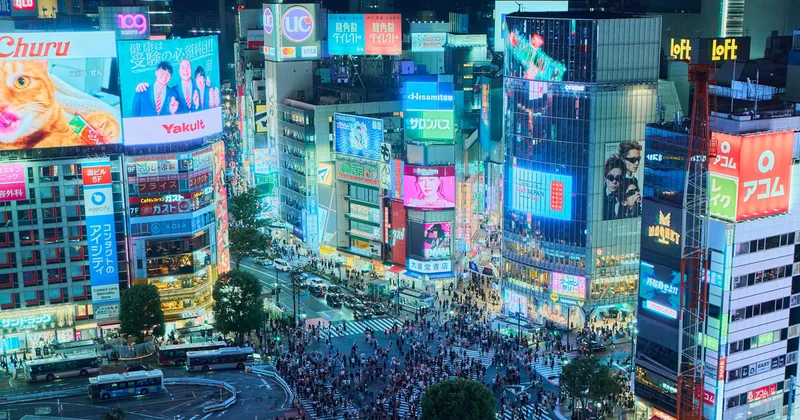
The Shibuya Highlights Walk and Secret View Spot starts by Hachiko with his story, walks you across the scramble with a guide, then into the back streets and up to a high spot to watch it from. 1.5 hours in small groups, runs rain or shine, rated 4.9 from 722 reviews; full refund if you cancel up to 24 hours ahead.
Explore the Shibuya highlights walkFrequently asked questions
Is the story of Hachiko true?
Yes. Hachiko was a real Akita who met Professor Hidesaburo Ueno at Shibuya Station and kept returning there for almost ten years after the professor died in 1925. Hachiko died in March 1935.
Do you need a ticket to see the Hachiko statue?
No. The statue stands in Hachiko Square outside Shibuya Station and is open to everyone at any hour, like the crossing itself. Expect a short queue for photos at busy times.
How many diagonals does Shibuya Crossing have?
One. Five roads meet at the junction, so it has five crosswalks and a single diagonal, not an X. The diagonal is about 44 m long.
Is the Hachiko statue open on Halloween?
In recent years it has been fenced off around 31 October, and on New Year's Eve, as part of crowd control. Shibuya City asks people not to come for Halloween; check the ward's announcement, usually out in early October.
Ready to book
Choose your tour
Check your date and the live price on GetYourGuide; the refund terms are shown on each option.
Shibuya Highlights Walk & Secret View Spot
- Local English-speaking guide on foot
- The Hachiko statue and its story
- Crossing the scramble with your guide
Shibuya Crossing, Culture & Hidden Gems Walk
Hachiko, the crossing, Center Gai and Koen-dori, with the history behind them
Shibuya Crossing & Hidden Streets Walk
Myth of Tomorrow, Nonbei Yokocho, Miyashita Park and Maruyama-cho